
What Four Agencies Missed: Driving 40% Revenue Growth for Slow North Through Paid Ads
CompanySlow NorthDuration4 Months, Aug-Dec. 2025RoleAd Strategist, Media Buyer and Shopify Platform Engineer
The 1 Challenge that Bedeviled 4 Agencies
With $1.4M in annual revenue and a team of nine, Slow North, an all-natural home goods company based in Austin, TX, had reached a frustrating plateau: four different agencies had tried to make paid advertising work, and none could crack the code to profitable growth.
Each of the 4 agencies brought their preferred platform—some ran Google, others Meta—and their proprietary framework. Some produced creative that felt off-brand. Others stayed on-brand but simply duplicated what competitors were doing. 1 agency even had experience in the past working with a large competitor.
The result was unprofitable ad spend that couldn’t scale past $8,000 per month. For a company of Slow North’s size, that ceiling meant paid advertising couldn’t be a meaningful growth driver.
I Measured, Tested, Analyzed and Re-Worked Varying Approaches
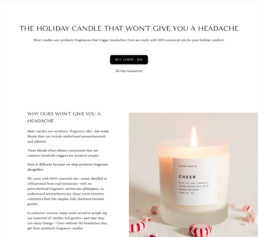
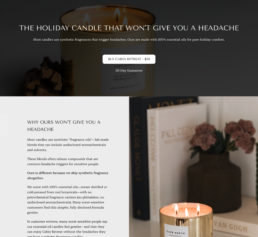
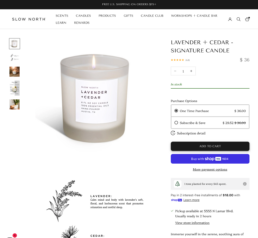
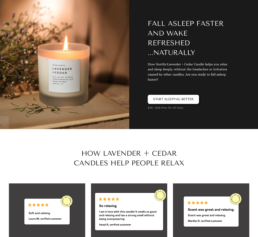
From August through December 2025, I rebuilt their paid advertising strategy from the ground up, focusing on Meta ads paired with custom landing pages. Instead of sending traffic to a low-conversion PDP (product description page), we created custom, high-converting landing pages. And rather than guessing at what would resonate, we used a proprietary framework to understand why customers actually hired Slow North’s products and built ads and landing page experiences around those motivations.
I developed two distinct frameworks targeting different customer contexts, created dedicated landing pages for each, and started conservatively at $2,000/month in ad spend.
My Work Resulted in 3x Scale and a 15% Improvement in ROAS
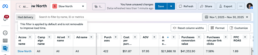
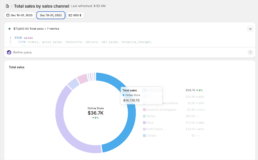
We scaled monthly ad spend from $2,000 to nearly $15,000. We did this while maintaining profitability throughout. Online channel revenue grew 40% year-over-year during this critical holiday period. More importantly, we’d finally cracked the code that four agencies before us couldn’t: profitable, scalable growth through paid advertising.
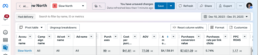
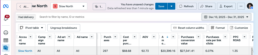
+15%
Increase in ROAS (return on ad spend)
+20%
Increase in AOV
3.7x
Increase in overall conversion value
+66%
Increase in order volume
Lack of imagination
Why Everyone Else's Ads Failed
First, past agencies were OK with spending $1 to make $0.50 in revenue. It doesn't take a rocket scientist to know that this type of advertising is not sustainable.
On the surface, it looked like an execution problem. Some agencies had produced off-brand creative. Others stayed on-brand but couldn’t drive conversions. Google didn’t work. Meta didn’t work. Different platforms, different frameworks, same result: unprofitable ads that couldn’t scale.
But when we audited their previous campaigns, a deeper pattern emerged. Every agency, even the ones that stayed on-brand, was talking about the same thing. With no unique creative or persona framework, the value the agencies came down to a tired refrain: ‘targetting’.
The real problem was that the agencies didn’t do the research necessary to understood why customers bought Slow North candles as opposed to other companies with other offers.
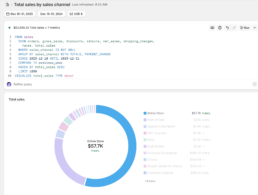
The business stakes were significant. Slow North’s online channel represented 30% of their revenue, and the August-December period was their critical holiday season. Without profitable paid advertising, growth was limited to word-of-mouth and organic reach. Four failed attempts had created real skepticism about whether paid ads could ever work for their business.
This required starting from scratch with research into the core emotional ‘jobs’ customers were hiring these candles to do.
Thanks to Clayton Christiansen
Understanding the Job Customers 'Hire' Slow North's Candles to Do
I started where the previous agencies hadn't: with the customers themselves. I did 4 informal interviews and I went deep into Slow North's existing customer reviews and feedback, amounting to hundreds of comments, spanning years of purchases.
I Looked Closely at Customer Feedback and Purchase Behavior
We read through reviews systematically, categorizing feedback into patterns:
- What situations triggered the purchase?
- What problems were customers trying to solve?
- What language did they use to describe the benefit?
- What alternatives had they tried before?
- What made Slow North different in their minds?
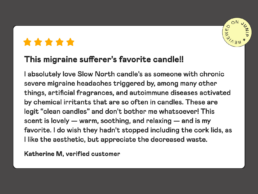
One pattern emerged in particular that felt worth testing: migraines and headaches from synthetic fragrances. This was a dealbreaker constraint that prevented an entire segment of customers from using scented candles at all.
Customer after customer described the same experience: they wanted candles for relaxation, for ambiance, for unwinding after work, but synthetic fragrances triggered migraines, rashes and other symptomatic responses. Slow North’s 100% essential oil formulation wasn’t just “cleaner” or “more natural.” It was the only option that let these customers use candles at all.
I Saw an Overlooked Insight: That Customers Saw Slow North Candles as the Only Solution to a Devastating Problem with Scented Products
Previous agencies had positioned Slow North as “better than” other natural candle brands—competing on ingredients, on craft, or aesthetics. Since ‘best’ is everywhere it was essentially forgettable, leading to low performance.
I identified an opportunity to reach people who couldn’t otherwise use scented candles.
We identified two distinct ‘Jobs-to-be-Done’ from the review analysis:
- Evening wind-down/sleep preparation: Customers trying to calm their nervous system after stressful days, create bedtime rituals, and fall asleep without triggering migraines
- Holiday comfort and atmosphere: Customers wanting seasonal ambiance and cozy spaces during the critical November-December period, without the headache triggers that made most holiday candles unusable
Both jobs shared the same core constraint that synthetic fragrances triggered migraines or other body responses.
I Created a Central Differentiator That Powered Performance
Rather than create one “better natural candles” campaign, we would build separate ad campaigns and landing pages for each job. Each would speak directly to the specific context and transformation the customer wanted, with the migraine constraint as the central differentiator.
This wasn’t about optimizing ad creative or testing audience segments. It was about speaking to the actual progress customers were trying to make in their lives—and addressing the constraint that made most solutions unacceptable.
If we could articulate the job better than customers could articulate it themselves, the ads would work. And if the landing pages proved we understood their specific situation, conversion would follow.